
If you have access to private parking then you'll need an EV chargepoint to take advantage of the convenience and low cost of charging at home. There can sometimes be some confusion around those, so this blog sets out to clear some of that up and hopefully help you select the correct charger for your specific needs.
This blog will look at install costs, charge types and alternatives to having a fully fledged chargepoint installed.
it's good to mention this early as EV charge point installations can run up to a couple of thousand pounds which can come as a shock. Those prices are generally arrived at when people need upgrades to their consumer unit including additional surge protection or long runs of cable which may involve taking up floorboards or digging trenches to facilitate installation in the selected location. Apart from the physical work, there is also paperwork that needs to be completed by the installer, as the network operator needs to be informed of new chargepoint installations.
And then, on top of those costs are the chargepoints themselves that vary in price from a couple of hundred pounds to over a thousand.
Having started this post with the ‘bad news’ I think it is worth to mention that installing a chargepoint is an excellent long-term investment that will repay itself many times over. aOnce the cables and upgrades are in place the only possible long-term cost would be to replace a faulty charger and anecdotally that seems to be a very rare occurrence.
Also, having laid out the expensive scenario of several thousand pounds it is worth to mention that with a straightforward install of a basic unit then you might be up and running for around £800.
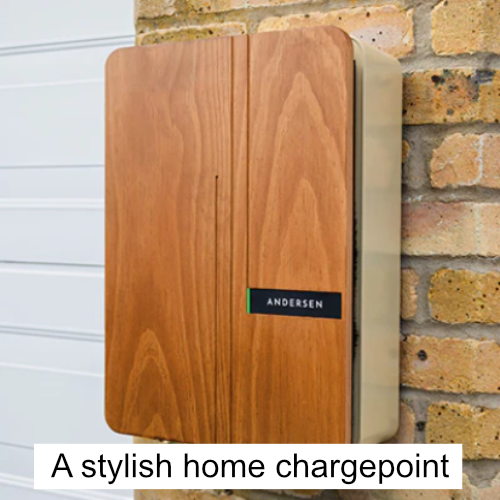
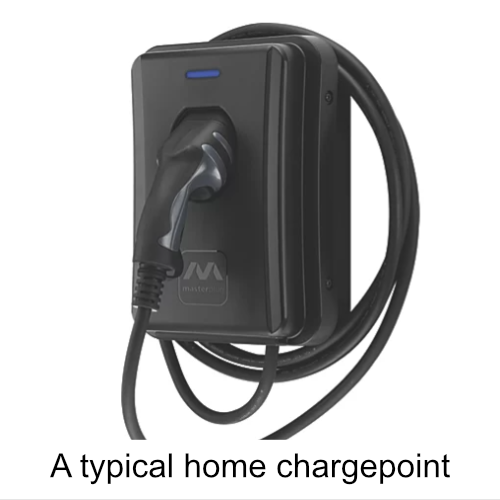
An important bit of background to understandfirst is that for EV owners to take full advantage of cost savings they willhave a specific EV electricity tariff that will give both a daytime and anovernight rate. Usually, those rates are around 8 pence per unit overnight andcloser to 30 pence per unit during the day, and most typically there are 5cheap rate hours available to customers, for example: 12:30 AM to 5:30 AM.
During those times the customer may also use any other appliances, heat their water (if applicable) and even charge their home battery, accruing further savings.
Given the saving potential the use of those tariffs is vital for EV owners, the good news is that you do not need to rely on a chargepoint to schedule charging within those times, all EVs have charge timers build into them, so you can use a very simple plug and socket set up (more on that later) and still see those savings.
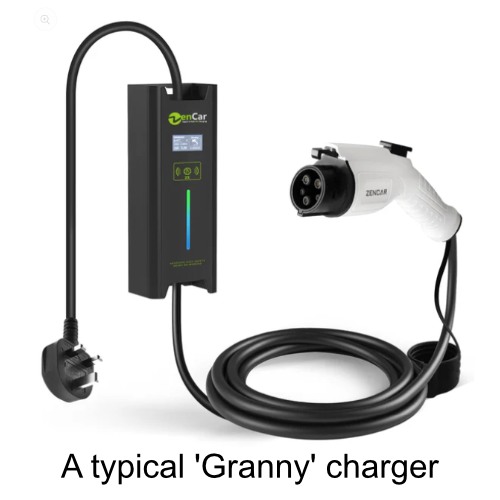
A ‘proper’ purpose-built EV charger will deliver a charge at 7kw. For most EVs that translates to adding around 30 miles per hour that the car is on charge, totalling around 150 miles in the ‘cheap’ overnight period.
Chargers can be very smart, or quite straightforward.
A smart EV charger can synchronise with your other home energy devices such as your home battery and solar, and with your power provider – most notably Octopus with its ‘intelligent’ rates, meaning that it can communicate with those to optimise your savings and to allow you to customise your consumption. For example if you decide to either export your available solar generation or to use your solar to charge the car.
All smart chargers have accompanying apps enabling you to schedule charge times and limits, monitor costs and consumption, and settings to give you notifications of charge states.
A straightforward charger will have fewer features but importantly will still deliver that 7kw/150 miles a night.
And due to their custom design all these chargers give peace of mind and tried and tested durability.
Tethered or untethered? This is another term you’ll come across that simply means with or without a permanently attached cable. The advantage of having your cable permanently attached to the wall unit is convenience, the disadvantage may be concerns about possible vandalism, and also the possible wear and tear of having the cable outside 365 days a year.

Granny charging is the widely adopted term for using a plug and socket charger that connects to a standard 3-pin plug. These comprise of a3-pin plug, a socket to connect to the car and an inline ballast to regulate amperage and detect faults.
Many older EV’s came supplied with granny chargers and thereare many others available on the market that can be bought – often as a stopgap, but sometimes for more long term use.
These chargers will typically only charge at up to 2.4kw, thereby adding around 50 miles of charge on a typical 5 hour overnight cheap rate session.
Whilst it is possible to plug a granny charger into a regular wall socket it is highly recommended to only use these chargers with a dedicated purpose-built socket that ideally has its own position on the household consumer unit. Furthermore, rather than having cables run from inside the house it is recommended to have a dedicated socket location outside, which then necessitates the installation of a waterproof socket.
There are large numbers of products on the market that fulfil these requirements, and they should be used, whilst many people do charge using standard domestic equipment it is also the case that people have experiences melted sockets, tripped fuses and granny chargers in ‘fault’ mode as they detect problems in the system.
Many chargers have adjustable current, enabling the user to reduce the charge speed that should theoretically also reduce the chance of sockets heating up.
As for costs, the granny chargers themselves are available from £100 and up to twice that.
It is harder to estimate the costs of having an additional socket installed as there are many variables, but in total expect a half days work from an electrician plus materials.
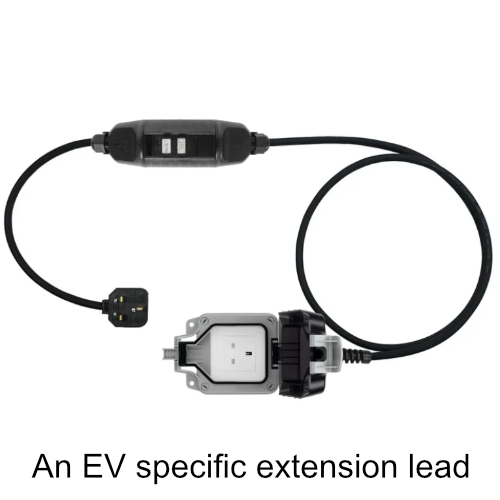
There may be times when you need an extension lead to reach from your socket to the granny charger itself, in this case extra care definitely needs to be taken, and it becomes vital to use a purpose-built EV specific extension lead, again there are many in the market in a variety of lengths.
Lastly if you are looking for a trustworthy local installer then look no further than the WightEnergyDirectory.co.uk that lists EV charger specialists and others who have that capability.

